Friday, 27 May 2011

domino effect: Toy room machine

For this assignment we were given the task of making a domino effect animation in Maya using are own idea.
For this assignment I first looked at different types of domino effects on then internet, some of the had multiple objects that would carry on the effect while some were fairly simple using only dominos them self’s

References:

Slinky effects going down the stairs in 3d and real reference videos:

Real reference slinky
Cardboard slinky
Slinky toy animation
Slinky 3ds Max
Better slinky animation
Spring toy


once I had my understanding of  what to do I then mind mapped out what I could use in the animation from this I chose to do a domino effect based on some kids toys. The idea was simple to make and from it I planned out the room area, what would be in the scenes how many scenes and cameras there would and what would happen.

(the layout)
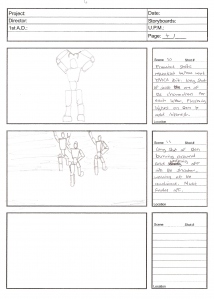
From the References I watched I liked the idea of having a little goal at the end and so for my storyboard I made put the whole idea together. the storyboard was simply designed to get a base idea of what I would do and also that it could be changed if any problem would happen.


along side making the storyboard and planning out the model room i also draw out references of the objets that would be in most of the scenes to have an understanding about what i would make and how it would look. 


When it came to modelling out the room and area I had a fair bit to do, through out the modelling I had to make changes that would make it easier to render once done so some of the object like the bed and small objects had to be removed to make the animation render faster. 

here are some pictures of the models with in the animation:


While I began to animate the objects in the scene I found a problem in my idea, in my storyboard I used a slinky as one of the objects to carry on the domino effect but found compactions in rigging the object to look convening so instead of using it I changed it for a bouncy ball that would go down the stairs and hit the button instead.
Another edit that I did to my animation was changing the dominos to a book hitting a ball which moved along a laid out track, the reason I had to change the idea was due to a problem with the dominos falling over using a dynamic called “gravity” 


over all this assignment was difficult to start of with but over a while my understanding on the software became easier to use. i had a lot of problem through out animating and texturing but i enjoyed learning about maya and will use what i have learnt to improve and make better 3d animations later on in the course

tutorials: vtc, youtube and internet
ideas: youtube and internet

Wednesday, 16 March 2011

history of animation


Animation is the rapid display of 2D or 3D images in sequence giving the watcher an optical illusion that makes inanimate object look as if it is animate. At the very beginning when animation was in its first stage it was a popular toy to children, in the present day animation is used in a variety of things like advertisement, children movies and TV shows.


The Thaumatrope
Back in 1824 a man called Peter Mark Roget invented a simple device which was made of no more then a paper circle and some string, this was called the Thaumatrope. At the time the Thaumatrope was a popular and simple toy to use, the child would simply pull the string which was tied onto both sides of the paper circle wind it up a couple of times and then release making the paper circle spin. On the paper circle were two different pictures and when the paper circle is spinning the viewer would see both pictures together, giving the illusion that the two pictures were one using simple movement. This simple invention which uses movement to create illusion was the first in animation.


The Phenakistoscope
As time past new ways to experiments animation were being developed and in 1830 two inventers, Joseph Plateau in Belgium, and Simon Stampfer in Austria both simultaneously the Phenakistoscope. The word Phenakistoscope meant: 'deceptive view'. The Phenakistoscope uses a cardboard disc with small slots around the edges this allow the viewer to see, on the other side of cardboard disc in between the slots where sequence drawings. When the viewer wanted to see the animation they would simply spin the cardboard disc on an axle in front of a mirror and watch the drawing move. The last phase of the movement joined up with the first phase, so the motion was repeated continually. Later versions had separate shutter disc and picture disc on the same spindle. The viewer looked through the slots in the revolving shutter at the sequence pictures: no mirror was necessary.


The Thaumatrope being the first animation was a simple design using a single picture on both sides of a paper disc. While the Phenakistoscope using a more complex design using a sequence of drawing to give a greater illusion of movement.

Zoetrope
In 1867 an American, William Lincoln, invented a patented new way to watch animation. The Zoetrope is based on the same principle as the Phenakistoscope, but is cylindrical in shape. This enabled several people at the same time to view the moving pictures. A zoetropes has thirteen slots through the cylindrical side; inside of the cylindrical is a strip with 12 images which would produce the moving subject that appears to progress forwards.


This newer design using a cylindrical shape enhanced viewing for many people as well as being hands free and in on uses of a mirror to watch the animation.

Flipper book
The first flip book appeared in September, 1868, when a man called John Barnes Linnett showed off is invention the Flip book. A flip book is a book with a series of pictures that vary gradually from one page to the next, so that when the pages are turned rapidly, the pictures appear to move by simulating motion or some other change. Flip books are essentially a primitive form of animation. Like motion pictures, a flip book relies on persistence of vision to create the illusion that continuous motion is being seen rather than a series of discontinuous images being exchanged in succession. The book must also be flipped with enough speed for the illusion to work, the way to watch the animation of the flip book is to hold the book with one hand and flip through the pages rapidly with the thumb of the other hand.


The flip book was one of the first types of animation that employed a linear sequence of images rather than circular (as in the older phenakistoscope). With this style of showing animation the flip book would give birth to cinema.


Stop motion
Stop-motion animation is a term used to describe animation created by physically manipulating real-world objects and photographing them one frame of film at a time to create an illusion of movement. There are many different types of stop-motion animation used, usually named after the type of media used to create the animation.
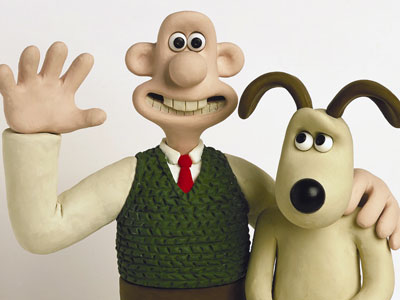
Clay animation or Claymation is the most commonly know type of stop motion used. What clay animation does is use figures made of clay or a similar malleable material to create a stop-motion animation. The figures used will sometime use an armature or wire frame, similar to the related puppet animation (below), which can be manipulated in order to pose the figures. Alternatively, the figures may be made entirely of clay, such as in the films of Bruce Bickford, where clay creatures morph into a variety of different shapes. Other examples of clay-animated works include Wallace and Gromit shorts (1989) and Curse of the Were-Rabbit (2008) and The Trap Door (1984).


Puppet animation mostly involves stop-motion but uses puppet figures instead of clay. To keep the puppets still when doing stop motion the puppet has an armature inside of them to keep them still and steady as well as constraining them to move at particular joints. Good examples of stop motion which use a puppet for stop motion are a Nightmare before Christmas (1993), Corpse Bride (2005) and Coraline (2009).
Unlike their animated counterparts stop motion is watched on film after the animation is done, some stop motions can take up to a year to complete before being seen. To give the animation lifelike movement the animator must move the figure or puppet slightly, take a photo move the figure again and repeat until getting the full motion.
 
Cel animation
Cel animation or traditional animation as it is also known as is the most known, historically and most popular form of animation. On its first appearance it amazed watchers as its style of animation using the same technique as the flip book. Cel animation is made in stages the first is the storyboard, this is done in a series of pictures which have been draw to give the artist a more vivid description on what will be happening in the story. When the storyboard is in order the animators move onto the next stage: the animation. The animation movement is drawn frame by frame on a transparent panel which is placed over a background, just like the flip book the frames are placed on top of the background and then removed to place the next frame on top the background and so on until the scene is finished. While the animators is placing the frames onto the background the animator takes a photo of the picture from a high perspective, with this the animator chapters the frame by frame motion which will be come the animation. Because traditional animation is drawn frame by frame it can be very expensive and time-consuming process.


Rotoscoping is a method of traditional animation invented by Max Fleischer in 1915. Rotoscoping is when animation is "traced" over actual film footage of actors and scenery. Traditionally, the live action will be printed out frame by frame and registered. Another piece of paper is then placed over the live action printouts and the action is traced frame by frame using a lightbox. The end result still looks hand drawn but the motion will be remarkably lifelike. In most cases, rotoscoping is mainly used as a guide to aid the animation of realistically rendered human good examples of using rotoscoping are Snow White and the Seven Dwarfs, Sleeping Beauty and Anastasia.

This was a great improvement of 2D animation for not only did cel animation not need help from human manipulation to display the animation but allows the watcher a more lifelike motion to the animation. Apart from stop motion being the only other to using a camera to create an animation cel animation is easier to correct then stop motion for if an animator makes a mistake in stop motion the scene would have to be redone while in cel animation if the animator makes a mistake they would simply draw a new frame which fits with the scene.    


CGI – 1990’s
Computer-generated imagery (also known as CGI) is the application of the field of computer graphics or, more specifically, 3D computer graphics to special effects in films, television programs, commercials, simulators and printed media. Video games usually use real-time computer graphics (rarely referred to as CGI), but may also include pre-rendered "cut scenes" and intro movies that would be typical CGI applications. These are sometimes referred to as FMV (Full motion video).
Apart from being used to make animation CGI is used for visual effects because computer generated effects are more controllable than other more physically based processes, such as constructing miniatures for effects shots or hiring extras for crowd scenes, and because it allows the creation of images that would not be feasible using any other technology. It can also allow a single artist to produce content without the use of actors, expensive set pieces, or props.
Computer software such as 3ds Max, Maya and Autodesk Softimage is used to make computer-generated imagery for movies, etc. Recent availability of CGI software and increased computer speeds has allowed individual artists and small companies to produce professional grade films, games, and fine art from their home computers. CGI was first used in movies in 1973's Westworld but in the sequel movie it used 3D Wireframe imagery in, Futureworld (1976), which featured a computer-generated hand and face created by students Edwin Catmull and Fred Parke.


2D CGI increasingly appeared in traditionally animated films, where it supplemented the use of hand-illustrated cels. Its uses ranged from digital tweening motion between frames, to eye-catching quasi-3D effects, such as the ballroom scene in Beauty and the Beast. In 1995, the first fully computer-generated feature film came out, Disney-Pixar's Toy Story, was a resounding commercial success. In additional digital animation studios such as DNA Productions (Paramount Pictures and Warner Bros.) and Pacific Data Images (DreamWorks SKG) went into production, and existing animation companies, such as The Walt Disney Company, began to make a transition from traditional animation to CGI.
In the end CGI surpassed all the different styles of animation, because CGI uses computer software to make its animation it was cheaper to use to create animation the cel animation. Apart from being cheaper to produce CGI also give an animation a more realistic look to both the effect used and characters in the animation.

2001 animation era

for my assignment i had to fine information about animations around 2001. for this i looked at both TV cartoons and movies and saw how the way people watch animation has changes over the years.


For my TV animation I chose an animation called Samurai Jack. Created by a Russian animator Genndy Tartakovsky
And aired in America for a TV series Samurai Jack was aired in 2001 until 2004.
The reason I chose this animation was because of its cinematic and comics style. When watching Samurai Jack it gives a sense of artistic value in both its background and style of displaying scenes. A another reason I chose this animation was because of its unique way to take on a old Japanese style of art and mix it with both futuristic and on real elements in its story and artwork. Considering this animation is a TV series the animators designed it to have a cinematic aspect putting in scenes that show movie aspects, comic book strip action and a strong idea of the characters. Throughout
The series of Samurai Jack it tries to keep an air of humor within it from becoming too serious.
The story of Samurai Jack is based around the good versus evil idea where Jack a samurai tries to stop the evil shape shifting demon from destroying the world using a magical sword. But before Samurai Jack can finish off this shape shifting Demon he sent into the future where the world has been taking over by evil and it’s up to Jack to get back to the past and undo what has been done.


what i enjoy most about this style and type of animation is that a lot of work and time was put in to making the animation look as western and smooth as possible something that is very hard to do in 2d animations. 


As many animators used 2-D drawing to create films (animation is like beauty and the beast, Cinderella, etc) a new aspect to making animated movies starts to become popularity amongst the audience. In 1995 a new company known as Pixar created software where they could create animations out of 3-D images this would be used to make the first ever 3-D animated movie called toy story. This animated movie was such a hit to boast adult and child audience it made more on money then any of Disney's old 2-D drawn animated movies. In 2001 Pixar after getting an understanding of the technique of 3-D animation now with a new idea for their next animated movie Pixar was going to test there abilities when they call monsters Inc.


The story of this film takes place in Monstropolis where monsters scare children for electricity for there own world but then one-day a kid gets into there world and starts causes trouble so then it is up to you to their to the to get her back to her own home and save their company. The film was released to theatres by Walt Disney Pictures in the United States on November 2, 2001 and in the United Kingdom on February 8, 2002. It was a commercial and critical success, grossing over $525,366,597 worldwide.
This was another big leap for animation and overtime 3D animation became the norm of all animated films such as Pixar, DreamWorks, entertainment etc. Until Pixar took over Disney creating more 3-D animated films and 2-D animation was only used particularly in TV shows for it being more cheaper to produce than a 3-D series.

Thursday, 3 February 2011

stickman walk

along side the group animation I had to make a single "walk" animation of my stickman. for this I did some research about different walk cycle and choose a right light setting for my animation.


out of the walk cycle I found I chose to do a realistic walk, the reason I chose a real walk cycle for because I wanted to test my ability to make the stickman believable and this walk would be easier to take consistent picture as the stickman legs would be close to the floor then if it was exaggerating.


even though the animation was very short I enjoyed making the stickman walk as I have done some thing like this before, I had a simple concept in my head to make the stickman walk from one side of the camera to the other go give a movement feel without having to move the camera. while I was moving the stickman I had some problems moving the hips leading to the hips to brake off the top half of the stickman. as I was half way through capturing the animation I used some blue tack to stick it together again and finished off the animation.

from this I animation I have learnt that some model that I may use can be very stiff and should be handle with care and I should add more frames to give a more smoother final project.


group project "YMCA"

for this projected we had to work in a group to create a stop motion animation using a build it yourself stickman.

First off we planned out what we'd make for are group animation, at first we thought of making a simple animation where the stickmen would play a game of football using a paper football but after a while we felt that we should test are skills of animation by making a short dance video. for are short dance animation we used a simple song that we could used repeating ceqins and easy dances moves to copy from.

 storyboard drawn by sally:

For the short dance animation we wanted to use the skill we were taught in 2d animation (like squash and stretch, anticipation and timing) and create a comical animation. The song we used from the animation “YMCA” was a very simple dance motion, the stickmen would stomp in place then after wave there arms from left to right before spelling out the YMCA.

The song and original dance: http://www.youtube.com/watch?v=CS9OO0S5w2k

In the group we all did little bit of everything in the animation from capturing the animation to changing the light effects, doing this we would all get to find what we better at for later group animations. When filming are animation we wanted a to use different styles of lighting to give a dance atmosphere so we used two spotlights one on both side that we could switch between and two camera that could give use two different shooting scenes one full face on the stickmen and one to the side. This became tricky to do as we didn’t what to catch the spotlights or other camera in the shot.

In all the animation went very well we were able to pull off most of the dance move without to much problems. There were only a couple of problem later on in filming the animation as 2 of the stickmen were very stiff to move and eventually broke but we were about to change it in the editing by making the stickmen sit in the background. In all the animation was a little difficult then was hoped for but it showed that anything can happen and you should always have a back up if needed.

Thursday, 27 January 2011

review an Auteur

kihachiro kawamoto


Born in Tokyo, Kawamoto became entranced by puppets as a youngster after being shown how to make them by his grandmother. He made figurines of popular stars of the day and staged them in dramatic tableaux. Despite being an avid movie fan, he originally had no plans to make a career out of his hobby. in 1944 Kawamoto graduated from Yokohama national university but remained stationed in japan for the remainder of the second world war.


Historian Brian Sibley sees the work of kihachiro kawamoto as uniting "the European approach to puppet filmmaking with the ling tradition of puppetry in japan, which dates back to bunraku puppet plays first presented in the seventeenth centry." This is partly because kawamoto trained in eastern Europe he went to Prague to study with jiri trnka after seeing the great Czech animator's Cisaruv Slavik (the emperor's nightingale, 1949), and spent some years working in Hungary, Poland, Romania and Russia. He returned to japan in 1965, where he produced animated films using puppets and other techniques. in his films, puppet figures take on the mannerisms of live performers.


His short films include Oni (the demon, 1972), Shijin no shogai (a poet’s life, 1974), Kataku (house of flame, 1979) and the book of the dead. (a link to more of kawamoto animations http://www.watershed.co.uk/kawamoto/film_clips.html )


Creating a puppet for these films took about 10 days. Particular care was taken with it most detailed features such as heads, hands, eyebrows and even teeth. Most all of his puppets he used were made from plaster mold. For just ten minutes of animation, one year of preparation was required.


The reason I chose this auteur is his style of stop-motion animation. Kawamoto animation are very detailed to give them a realistic view and have the characteristics of real life actors, making the animation seem more real. His style of story-telling is very colourful giving the background ad characters a light and bright colours, but also having a dark story telling of ghost and monsters putting fantasy and in a darker scene.


Information providid by: 'The Animation bible', Wiki, YouTube, The Guardian

Wednesday, 8 December 2010

Sound animation assessment

15th of November 2010 (week1)

Last week we were given an assignment to use soundtracks will be given in class to create our own animation. My plan is to divide the week so I have into designing the storyboard using the dope sheet make the rough animation and finish off with the final animation.

Week 1
Week2
Week3
Reference, research, planning out, storyboard and dope sheet
Quick sketch animation and testing
Lining (colouring possibly), final animation and final review


For my references I have been looking on the Internet and using my book of cartoon animations to get an understanding of the characters I will be creating for my animation. At first I looked for characters that were complete opposites to gain understanding of design for my own characters but went into a bit more depth finding characters not only of opposites but sizes. From that I design my characters making one my characters loud, annoying and small while the other large, shy and timid.

My idea for this animation is purely based around a simple and common plan where a small grey squirrel and a chipmunk fighting. A small squirt is grouchy, quick-tempered and restless and slightly paranoid while the other character a chipmunk is slow, easy-going and slightly jumpy. For these two characters I have been designing references to suit their voices from the audio to the characters as well as research on the animals they are based on.

From the audio I created a story that was interesting, funny, and very over exaggerated movements with that in mind I listened over the audio to get a story based. From what was given to me in the audio I started off with creating a fight scene between the two characters where the squirrel believed that the chipmunk had stolen something from him. After a couple of sketches later I decided to make it more interesting by using the end line said in the audio in different contexts instead of it being the chipmunk this world turns around and point at a person behind them believing he stole it.

After creating my storyboard and animatic I then began planning out my dope sheet. From the audio I counted out how many frames I would need to pronounce certain words and sentences and then cut scenes up. This is my first time using a dope sheet and though it was confusing to use I have a certain amount of understanding on how worked.

Before moving on to making the rough sketch of my animation I first acted out the scenes that were going to happen within the animation first to see if they fitted. From acting out scenes with another person to help me I was able to get a better understanding of what to do within the scene to make it more realistic still over reacting movements from the acting I got an idea which I would add to one of the scenes of my animation.
 
22nd November 2010 (week2)

after doing the references and getting the research needed for my animation I then moved on to creating quick sketches of the animation testing before lining it for the final project. After watching the animation test I realise that I created too much of a long gap in one of the scenes and realised their mistake. To see what I could do to fill in the long gap I went back to my storyboard and thought out what would feel it in from this I used one of the scenes as the starter by the characters were taught to come forth to each other. After doing a second test with the new scene in giving its a check over I decided to move on to making the final project of the animation.


 first animation test

29th of November 2010 (week3)

In the end result I was quite pleased with how everything turned out the lining I added to the animation made more distinct and stands out as well as the acting that was put into the animation to give the characters more movement. From this animation I have learnt much about using a dope sheet in planning ahead before going into the final result from it I created a believable scene that I believe was creative and funny as well. There were some things that I wish I could have done to this animation such as creating to be more fluent and had better timing with mouth movement.

Two genres assessment

Fantasy genre from Peter Pan


The story from Disney's Peter Pan is about three children who do not want to grow and meet a boy named Peter Pan who wants to help them by taking them to a world called Neverland. When the three children and Peter Pan returned to Neverland bear in a world unlike any other with mermaids Indians Pirates hideaways made out of trees and adventures like no other.

visual:

  • mythical creatures
  • bright colours
  • storytelling beginning
  • fantasy world
  • flying
  • fairies
  • treasure
  • rhyming
  • anthropomorphic
  • amazing treehouse
  • imagination
  • amazing battles


Sounds:
  • tingling bells
  • fluteplaying
  • violins


Sport and comedy genre from wacky racers

Wacky races a TV show about a group of very different characters racing to to win. In the TV show so many different characters with many different abilities attached to their vehicles using Bandon and inventive weapons to make it funny and interesting.

Visuals:
  • Vehicles
  • different characters
  • Racing track
  • commentator
  • slapstick
  • racing
  • trickery
  • Road
  • trophies
  • finish line/start line
Sound:
  • engines noises
  • fast sounding music
  • different theme songs


Wednesday, 24 November 2010

Rotoscoping


As animation style used to this day rotoscoping invented by max Fleischer was a way to capture real life motion and use it in animation. When max Fleischer created this style of animation he used it to make the cartoon ‘Koko the clown’ the very first to use rotoscoping.


The rotoscope of the time was a very simple design using a film projector at one end of a well-placed drawing desk the animator would trace over the persons form frame by frame until the end result was a smooth life-like movement.


In august 9th, 1930 another animation would also use rotoscoping to create a realistic style dance.  The character by the name Betty Boop appeared on a cartoon show called dizzy dishes. At first she was designed to be a poodle but as time passed she soon became a fully human character. Through out the 1930s she became known face for her interesting look and have very unique accent.

In Betty Boop in Minnie the moocher before the cartoon starts the viewers watch Callaway (the dancer) perform showing off his skills in dancing. As the cartoon begins it tells a story of how Betty is getting told off which makes her unhappy and so runs away from home, at this point there is no rotoscope used but recycled animation (like walking, crying etc). As the cartoon carries on betty and her friend bimbo find a cave where they meet a ghost walrus, at this point the rotoscoping is used as the ghost walrus starts dancing. The dance movements used to make the character dance were the same movements done by Callaway before the animation started. From this animation I enjoyed how they used the rotoscoping style to make the character move but yet not having a human character


Throughout Walt Disney's years in 2-D animation they used rotoscoping not just to get an understanding of the body and movement but also using it in their own animated movies. One of their most well known animated movies, which used rotoscoping, was Snow White and the seven dwarfs. The rotoscoping was mainly used on snow white for particular scenes for example when she is dancing with the Prince.
Snow White and the seven dwarfs were the first feature film that Walt Disney was planning to develop as they wanted to go into more detail than their short projects that as Mickey Mouse and the silly symphonies series from this Disney was planning to expand their out let by moving into features. Snow White and the seven dwarfs being their first feature length film had a budget of $250,000 that was 10 times the budget of an average silly Symphony.
Finally when the movie was released in 1938 Snow White and the seven dwarfs was a box office hit bringing more then $200 million internationally.


Rotoscoping was used extensively in China's first animated feature film Princess iron fan 1941. The inspiration for the film Princess iron fan came from Disney's own rotoscoping animation Snow White and the seven dwarfs. For Wan Chaochen and Wan Dihuan it was to set the standard and attempt to create a film equal quality to form the nation's honour. The firm to 3 years to June 30 seven artist and ¥350,000 (approximately £2635) to make although the Disney influence distinct in much of the animation there is also a distinct Chinese style in the film a style that would grow much stronger with the Wan brothers. Subsequent films in the following decades rotoscoping was an extensively to save money and the eyes of the live action are often visible in the face of the animated characters. This animation would render past 20,000 frames, using up more then 200,000 pieces of paper.


It was also used extensively in the soviet union where it was known as eclair from the late 1930s to the 1950s it is still a call use was in force as a realisation of socialised a realism most other films produced with it were adoptions of folk tales and poems for example the nightmare before Christmas or tales of the fishermen and the fish only after the 1960s did animators start to explore very different ideas.
Another type of animation that used rotoscoping was a music video for a song from a-ha called take on me in 1985 this register animation used all of the real live action within the animation.
In all rotoscoping was an effective yet long winded way to get perfected movement and live action in animation and from these animators have learnt movement of character which can be used in cartoons made less realism


As 2d animation began to die down in popularity a new form of animation would make way for a new aspect on the style of rotoscoping. 3d animation became the new style of animation using less drawing and time it became the best way to make animation, but like all animations it had a hard time capturing real life motion.

In 2002 the movie Lord of the Rings: The two towers the new style of rotoscoping would be used to design and animate a character known as ‘Gollum’.  Weta digital a digital visual effects company based in wellington, New Zealand. Began animating Gollum in late 1998 to convince new line they could achieve the effect. Andy Serkis “played” Gollum by providing his voice and movements on set, as well as performing within the motion capture suit later on. His scenes were filmed twice, with and without him. 


Originally Gollum was set to solely be a CG character, but Jackson was so impressed by Andy Serkis’ audition tape that they used him on the set as well. Gollum’s CG model was redesigned during 2001 when Serkis was cast as Sméagol (Gollum's former self), so as to give the impression Andy Serkis as Sméagol transforms into the CG Gollum. The original model can still be glimpsed in the first film. As it was easier to have an actor to perform with in the scene then a CG character the animators in the end rotoscoped the CG Gollum and animated on top of these scenes.


This type of rotoscoping used a more complex way to capture real life motion. The actor would wear a ‘motion capture suit’ this suit has markers or balls that display the parts of the body they are attached to giving the character a form to base on. When the character is designed and made the animators line up the parts of the body to the right area so that the character moves in sync leaving a character with a life like movement with 3 dimension angles.

From what I have learnt from rotoscoping is that to capture true real life motion has a lot of pros and cons giving the animator a chose to make the animation as real as possible or over exaggerate on parts that my be comical or action packed, and that rotoscoping though not used as it was before to make 2d is still used to this day in animation and illustration in 3d and digital programs. 

Videos and refferences:


Monday, 8 November 2010

Dodo curiosity animation

For this task I was given four weeks to design, plan out, storyboard and draw an animation that is less then 20 seconds long. The first part of my task was to get a simple but effective character which I would use for this animation, I wanted to use a character that uses squash and stretch effect while walking as well as giving a simple walk cycle. After a couple of designs and storyboards later I finally decided to use my character the Grim Dodo
before planning out my storyboard I did a small reference sheet of the character so that I could get a more defined look at what the character may turn out in the final result. After designing my reference sheet I then moved on to my storyboard, in the storyboard I planned out a walk cycle before reaching the main phase of the animation. In the main phrase the character first walks past the button before returning to it he then presses a button and wait for something to happen only to get knocked on the head by a small anvil.

When it finally came to drawing out my animation there were some things that I had to cut from my final project, one of the things I had to cut from my animation was the first walk cycle before the character gets the main phrase because it took up too much time. Another part of the storyboard I had to cut from the final animation was the dramatic scene where the character with get hit by a larger anvil. Although I was not able to use the walk cycle in the main phrase I still use the idea of how the character would walk from it in the main phase
within the main phase of my drawing for the animation they used a set frame and an outline to keep a consistency within my animation as well as using tracing paper in my own techniques to keep the walk cycle consistent as well.
In my end result I was quite pleased with how it turned out and I feel that I gave a fair amount of pause time between each action. In my final result I do wish that I was able to give more detail and designed to the character to show more reaction within the face.